

In many industries and daily activities, safety is the first priority. Whether people are working at heights, climbing mountains, performing rescue operations, or handling construction tasks, the risk of falling or losing stability is always present. One of the most important tools designed to reduce such risks is the Safety rope. Although it may appear simple at first glance, a Safety rope plays a critical role in preventing accidents, protecting lives, and supporting safe movement in hazardous environments.
A Safety rope is more than just a piece of strong material. It is a carefully designed protective device made to withstand high tension, harsh weather, and heavy use. It is often used as part of a larger safety system, working together with harnesses, anchor points, connectors, and other protective equipment. Its purpose is to secure a person or object so that if a slip, fall, or unexpected movement occurs, the risk of serious injury is reduced. In many situations, the presence of a Safety rope can mean the difference between a controlled situation and a life-threatening accident.
What Is a Safety Rope?
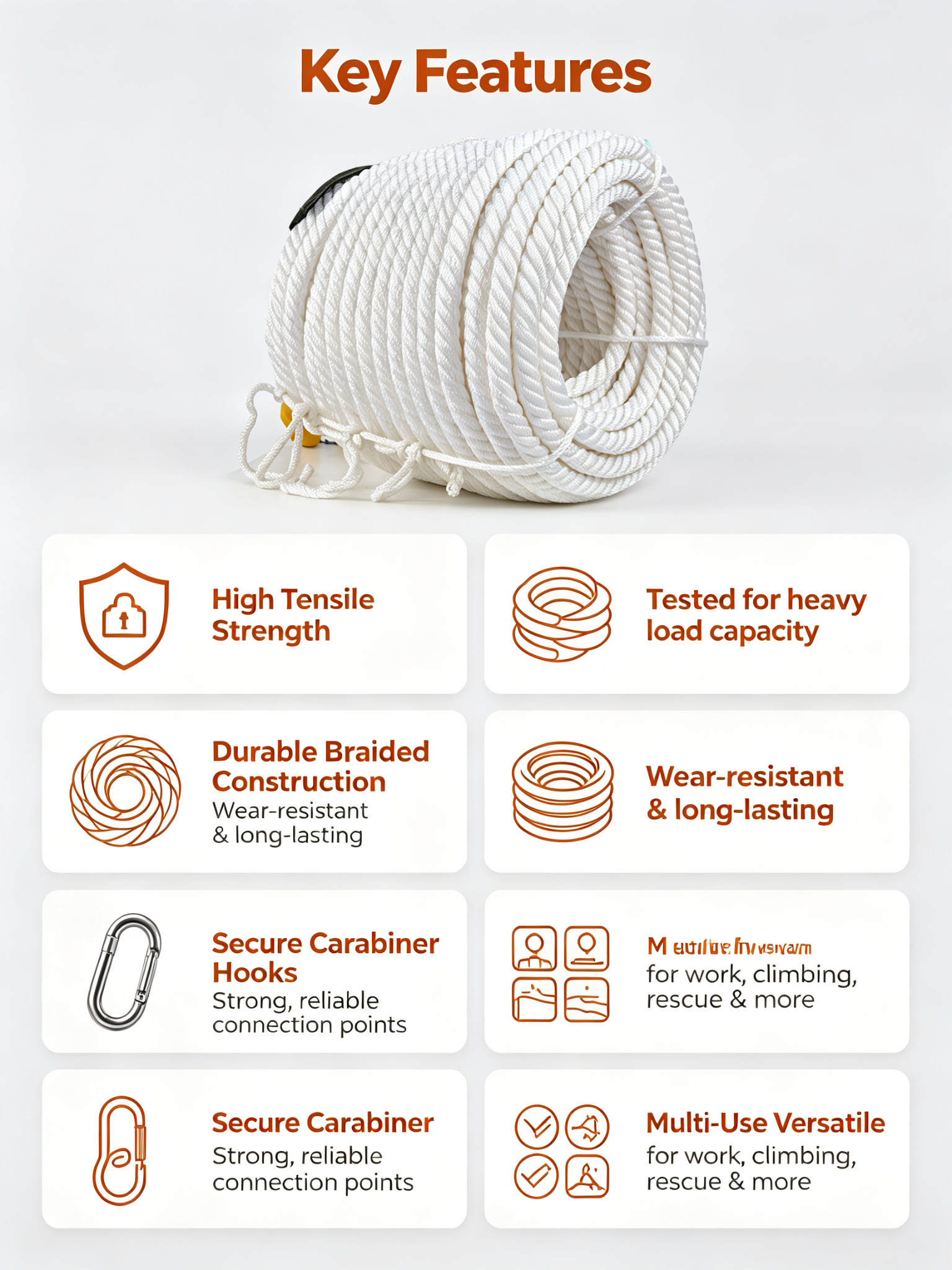
A Safety rope is a rope specifically intended for protection, support, or restraint in risky environments. It is made from durable materials such as nylon, polyester, or other high-strength synthetic fibers. These materials are chosen because they offer excellent resistance to wear, stretching, moisture, and UV exposure. Some ropes are also designed with special coatings or advanced weaving structures to improve strength and longevity.
Unlike ordinary ropes used for packaging or household tasks, a Safety rope must meet strict performance standards. It needs to support weight reliably, maintain structural integrity under pressure, and perform consistently in emergency situations. Because human lives often depend on it, every Safety rope must be inspected carefully and used according to safety guidelines.
Common Uses of Safety Rope
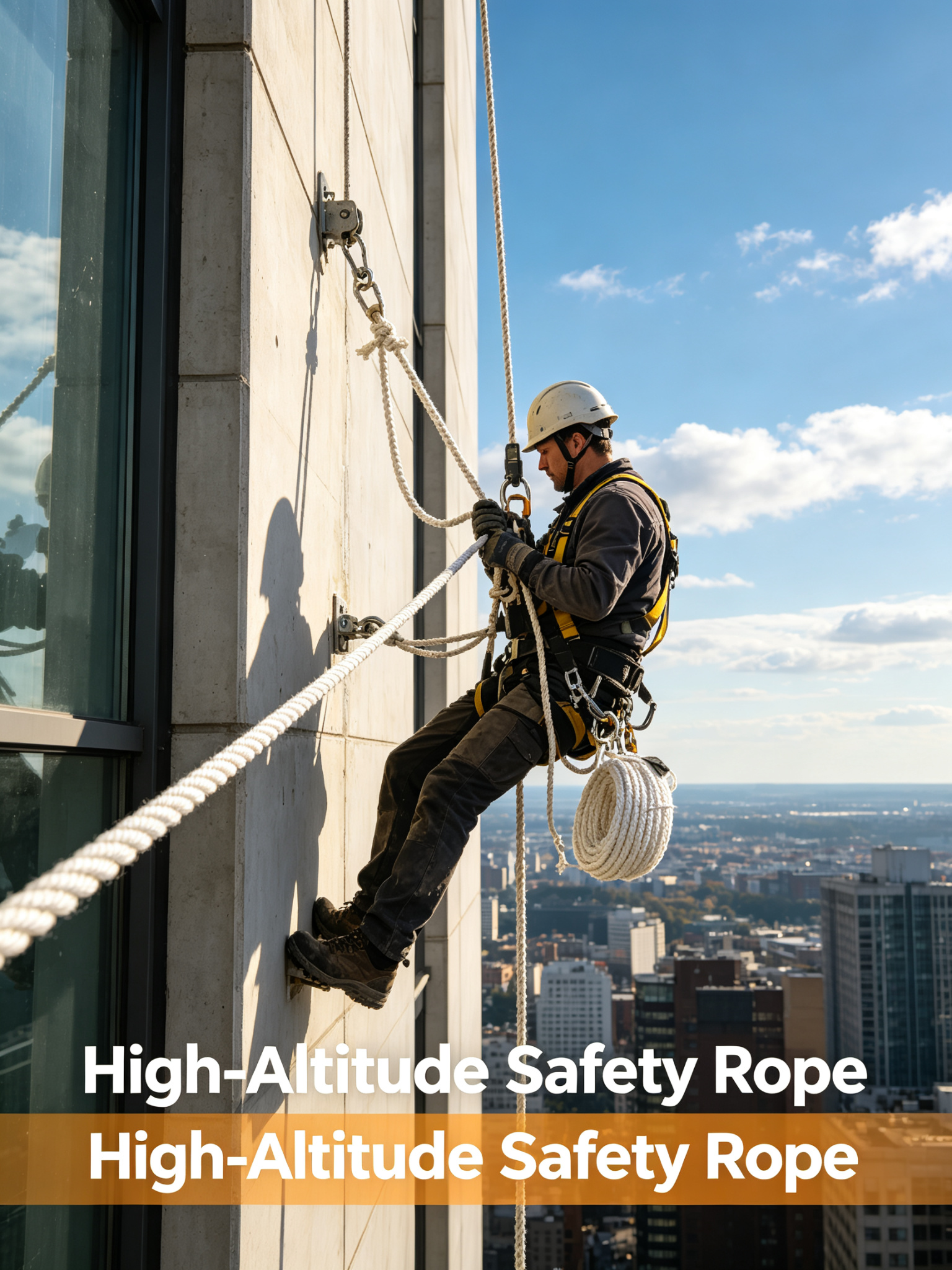
The use of Safety rope is widespread across different fields. In construction, workers often use it when operating on roofs, scaffolding, towers, or elevated platforms. In these environments, even a small mistake can cause a fall from a dangerous height. A properly installed Safety rope helps prevent such accidents by securing the worker or creating a safe working boundary.
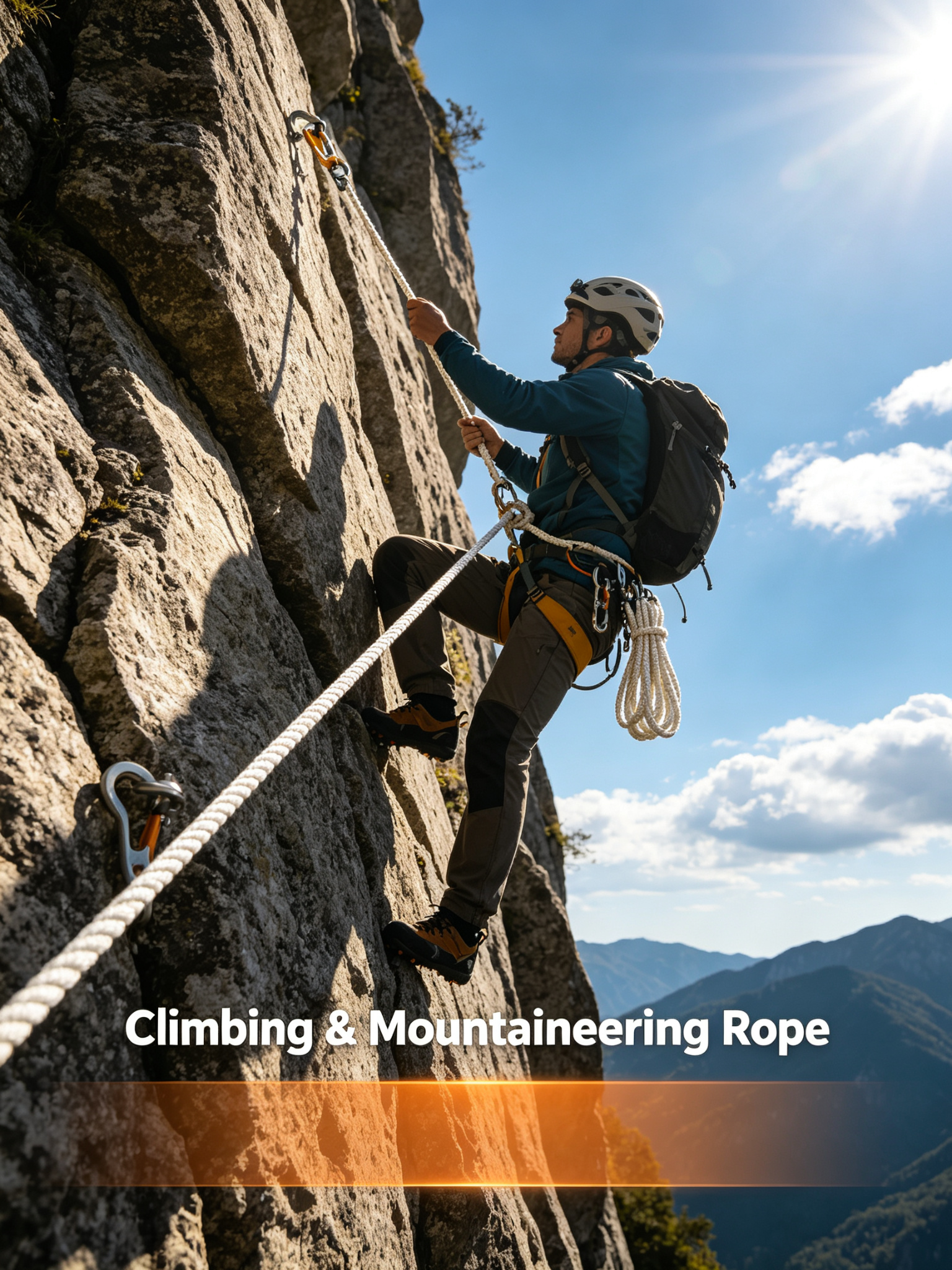
In climbing and mountaineering, the Safety rope is essential. Climbers rely on it to stay attached to anchors while ascending or descending difficult terrain. The rope provides both physical support and psychological confidence, allowing climbers to focus on their movement rather than constantly fearing a fall. In these settings, the quality and condition of the Safety rope are extremely important, because the rope may need to absorb sudden force if a climber slips.
Rescue operations also depend heavily on Safety rope. Firefighters, search-and-rescue teams, and emergency workers use ropes to reach people in dangerous locations, such as collapsed buildings, cliffs, flooded areas, or tall structures. A strong Safety rope helps rescuers move safely and carry out their work more effectively. In some cases, it is also used to lift injured persons, lower equipment, or secure access routes.
Industrial facilities, warehouses, and maintenance operations also benefit from the use of Safety rope. Workers may need to perform inspections on tall machines, clean high surfaces, or handle tasks near edges or open spaces. A Safety rope helps create a controlled environment where the chance of accidental falling is much lower.
Why Safety Rope Matters
The value of a Safety rope lies in its ability to prevent severe injury or death. Falls remain one of the leading causes of workplace accidents around the world, especially in industries involving height. Even a fall from a relatively low platform can cause broken bones, head injuries, or long-term physical damage. A Safety rope is one of the most direct and effective ways to reduce this danger.
Another reason the Safety rope is important is that it increases confidence and efficiency. When workers or climbers know they are protected, they can perform tasks with better focus and less hesitation. This does not mean they become careless; rather, they are more capable of completing their responsibilities in a calm and controlled way. Safety equipment often improves productivity because it reduces fear and interruption.
A Safety rope also plays a role in emergency planning. In unexpected situations, having a reliable rope system can help people evacuate, stabilize equipment, or create a secure path for rescue. It is a tool not only for prevention, but also for response. This makes it a versatile and valuable part of any safety strategy.
Features of a Good Safety Rope
A high-quality Safety rope should have several important features. First, it must be strong enough to handle the intended load. Strength is usually measured by the maximum force the rope can withstand before failure. However, strength alone is not enough. The rope must also have good abrasion resistance, especially if it will rub against rough surfaces such as rock, metal, or concrete.
Second, a good Safety rope should have low stretch or controlled stretch, depending on its purpose. In some applications, such as fall arrest, some stretch is helpful because it helps absorb impact. In other cases, such as positioning or static support, very little stretch is preferred to maintain stability. Understanding the intended use helps determine which type of Safety rope is appropriate.
Third, visibility can be important. Many Safety rope designs use bright colors so that the rope is easy to see in complex environments. This improves awareness and helps prevent tangling, misplacement, or accidental contact with moving machinery.
Fourth, the rope should resist environmental damage. Sunlight, rain, chemicals, heat, and dirt can all affect rope performance over time. A dependable Safety rope is designed to tolerate these conditions as much as possible, but it still requires regular inspection and proper storage.
Proper Use and Maintenance
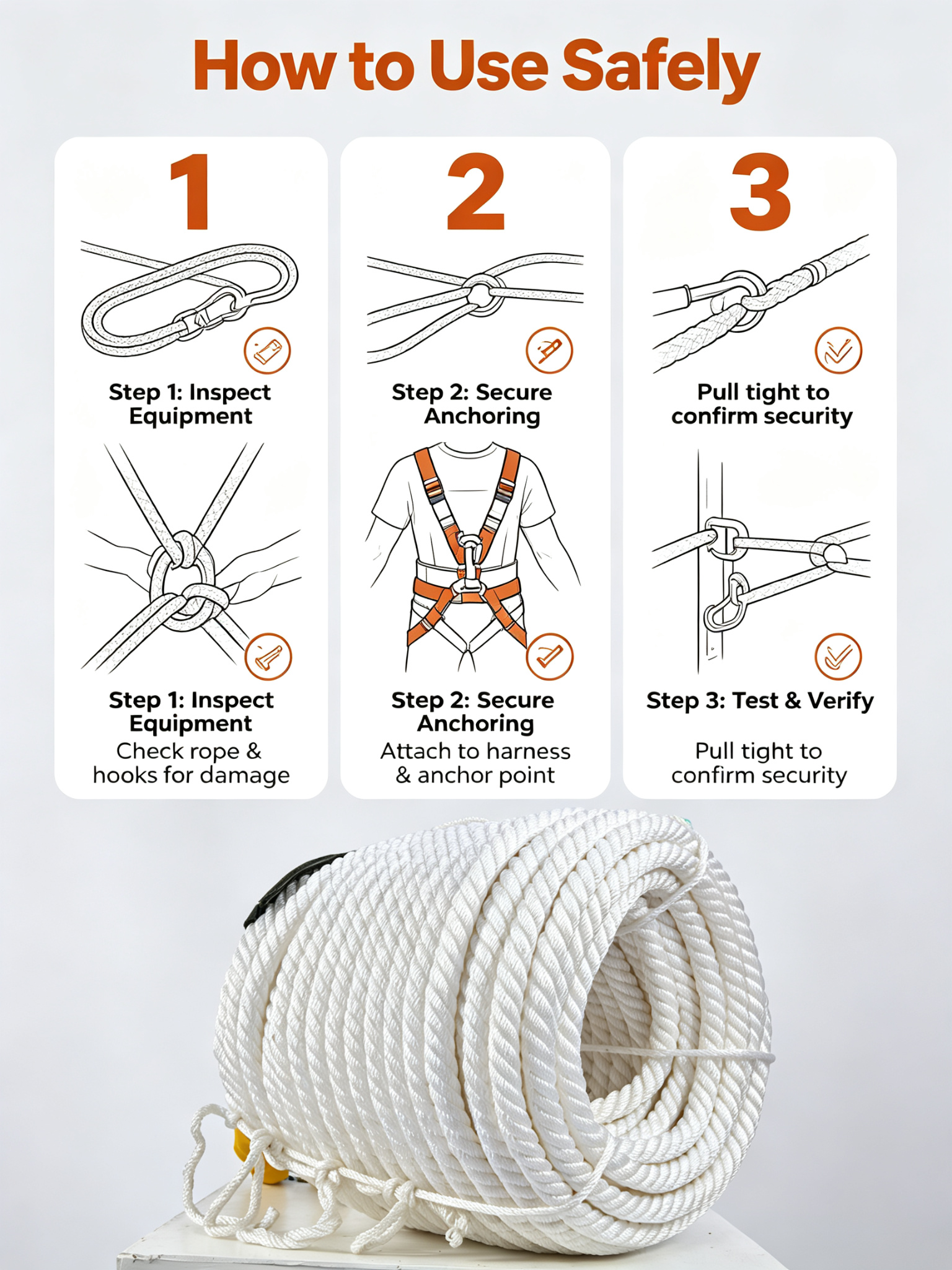
Using a Safety rope correctly is just as important as choosing the right one. Before every use, the rope should be checked for signs of damage, such as fraying, cuts, discoloration, stiffness, or irregular wear. If any serious defect is found, the rope should not be used until it has been evaluated by a qualified person or replaced if necessary.
A Safety rope should always be used with compatible equipment. This includes harnesses, carabiners, connectors, and anchor points designed for the same purpose. Improper combinations can reduce overall safety and increase the risk of failure. Users should also understand the correct methods of tying knots, connecting systems, and distributing load.
Storage is another essential part of maintenance. A Safety rope should be kept in a clean, dry place away from sharp objects, direct sunlight, chemicals, and excessive heat. Dirt and moisture can weaken rope fibers over time, while repeated exposure to harsh conditions may shorten its usable life. After heavy use, especially in rescue or industrial environments, the rope should be cleaned according to recommended procedures.
Training is equally important. Even the best Safety rope cannot protect someone who does not know how to use it. Workers, climbers, and rescue personnel should receive instruction on rope inspection, setup, load limits, and emergency procedures. Proper training reduces misuse and increases the effectiveness of the entire safety system.
Safety Rope in Everyday Life
Although people often associate Safety rope with high-risk jobs or adventure sports, it can also appear in ordinary life. For example, it may be used to secure items during transport, restrict access to dangerous areas, or support temporary barriers. In outdoor activities such as camping, boating, or hiking, a Safety rope can help manage equipment and create safer conditions.
Its presence in everyday situations shows that safety does not only belong to specialized professions. Careful planning and the right tools are useful in many different settings. A simple rope, when designed for safety, can provide reassurance and practical protection in both professional and personal use.
The Future of Safety Rope
As technology advances, Safety rope designs continue to improve. New materials are being developed to offer greater strength, lighter weight, better resistance to damage, and longer service life. Some ropes are being engineered with advanced weaving patterns or smart features that help users identify wear and monitor usage. These innovations may lead to safer and more efficient rope systems in the future.
However, no matter how advanced the product becomes, the basic principle remains the same: a Safety rope must be trusted, inspected, and used correctly. Technology can enhance performance, but human responsibility remains essential. Safety depends on both the equipment and the behavior of the people using it.
Conclusion
The Safety rope is one of the most important tools for protecting people in dangerous environments. It helps prevent falls, supports rescue operations, improves confidence, and contributes to safe work practices. From construction sites to climbing routes, from industrial facilities to emergency missions, the Safety rope continues to serve as a vital line of protection.
Its effectiveness depends on proper selection, correct use, regular inspection, and careful maintenance. When treated with the attention it deserves, a Safety rope can save lives and make risky tasks much safer. In a world where people often work and move in challenging places, this simple but powerful tool remains an essential part of safety planning.
This website uses cookies to ensure you get the best experience on our website.


 Español
 Portugues
 Pусский
 Français
 Deutsch
 日本語
日本語 한국어
한국어 العربية
 ไทย
ไทย



 WhatsApp
 Phone
Phone