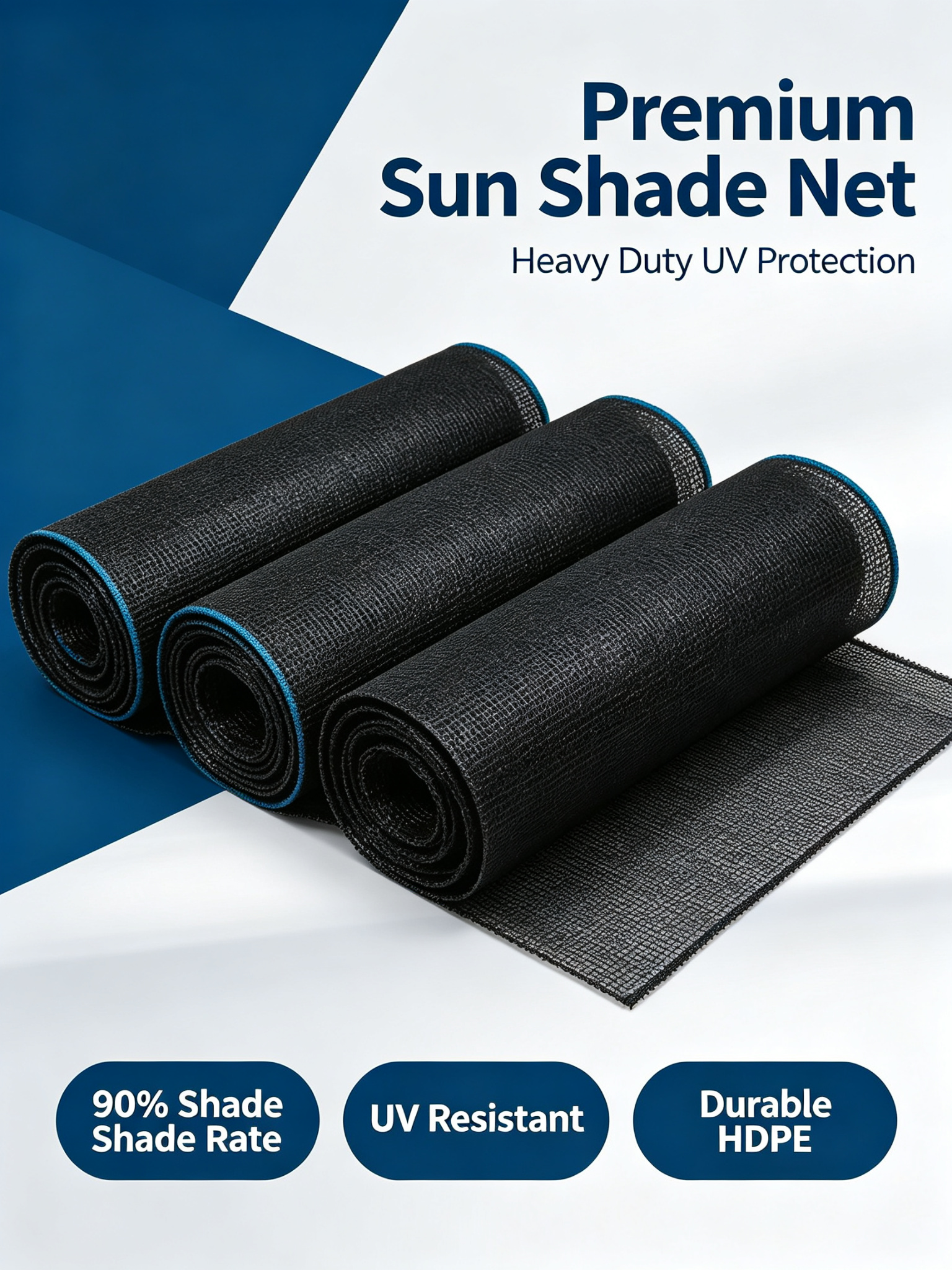
Sunshade net, also known as shading net, sun protection net or cooling yarn, is a lightweight and highly durable new protective covering material. Featuring excellent shading, cooling, windproof and moisture retention properties, it is widely applied in agricultural planting, landscape gardening, outdoor venues, engineering dust prevention and many other fields, serving as a highly practical and cost-effective outdoor protection solution. Compared with traditional sun protection methods, sunshade nets are breathable, weather-resistant, easy to install and reusable with high cost performance, making them an indispensable protective material in daily production and life.
1. Core Materials and Manufacturing Technology
High-quality mainstream sunshade nets on the market are mainly made of high-density polyethylene (HDPE), supplemented with anti-ultraviolet and anti-oxidation additives, and manufactured through wire drawing and precision weaving processes. Some high-end products adopt PET and PP materials for optimized performance. The material is lightweight and tough, causing no damage to crops and greenhouse frames. Meanwhile, it boasts outstanding aging resistance, tensile strength and tear resistance, capable of withstanding wind, sun exposure, rain and snow erosion.
Sunshade nets processed with special techniques can effectively resist ultraviolet radiation. They are not prone to fading, embrittlement or damage under long-term outdoor exposure, with a normal service life of 3 to 8 years. Different from ordinary plastic nets, their mesh structure balances protection and air permeability without stuffiness or water accumulation, suitable for various open and semi-open outdoor scenarios.
2. Core Functions
2.1 Sun Shading and Heat Cooling
This is the most fundamental function of sunshade nets. With meshes of different densities, they can accurately adjust the shading rate, block strong sunlight and harmful ultraviolet rays, and avoid direct sun exposure. When covered in summer, they can significantly reduce ambient temperature, especially in closed and semi-closed spaces such as greenhouses and courtyards. They effectively prevent burns and aging caused by high-temperature exposure, creating a comfortable shaded environment for plants, outdoor equipment and venues.
2.2 Moisture Retention and Plant Protection
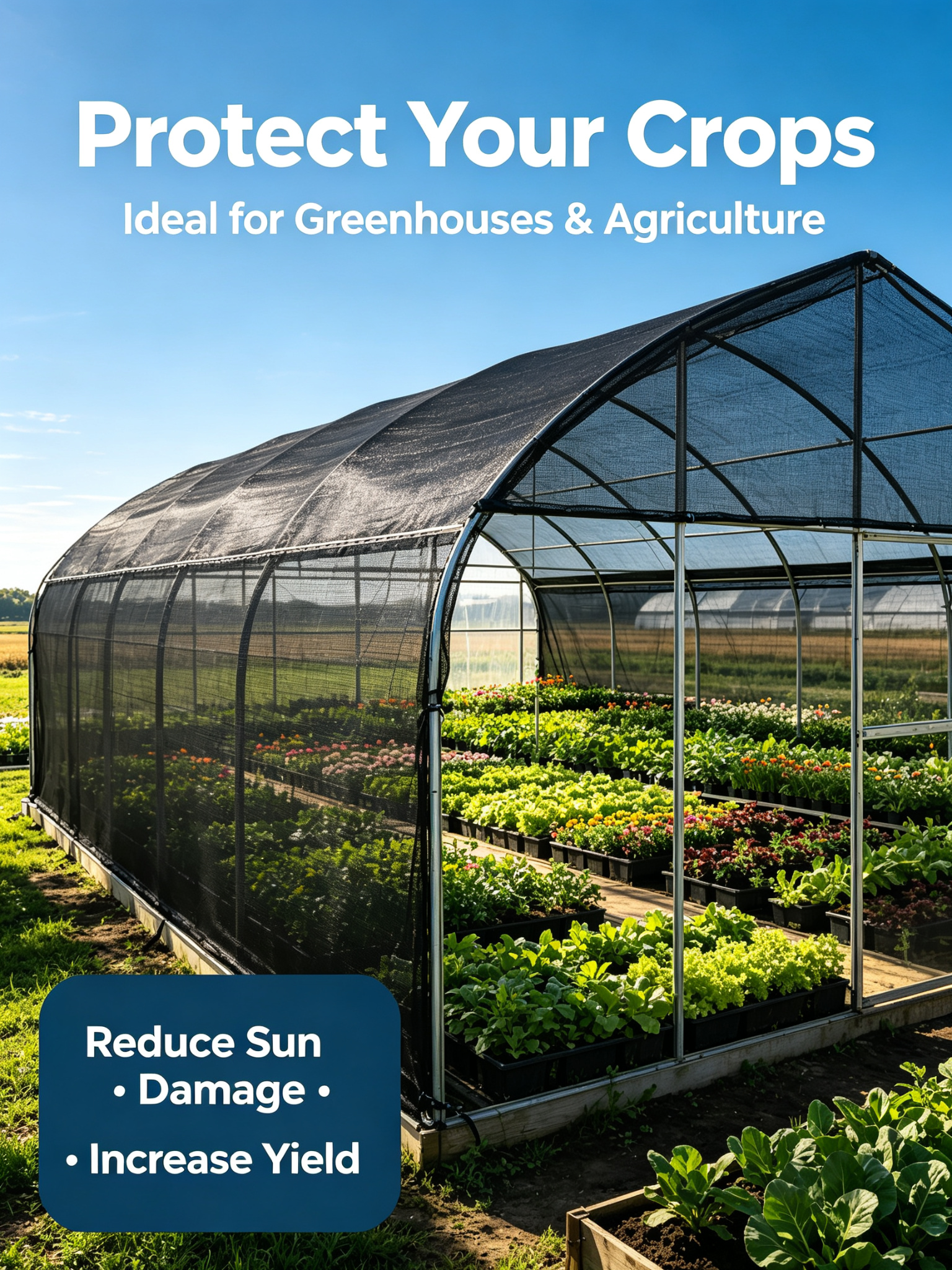
In agricultural and horticultural scenarios, sunshade nets block direct sunlight on the soil, reduce soil water evaporation, and prevent soil cracking and plant dehydration. They also weaken strong light burns on plant leaves, reduce plant transpiration, protect the growth of seedlings, shade-loving plants and flowers, and greatly improve seedling survival rate and crop yield.
2.3 Wind and Rain Resistance with Buffer Protection
The flexible mesh structure buffers the impact of wind and rain. It protects seedlings from lodging and branches and leaves from breaking caused by heavy rain and strong wind, and reduces dust and sundries brought by wind. In low-temperature winter days, sunshade nets provide certain heat preservation and humidification effects, relieve day and night temperature differences, reduce frost damage to crops, and realize all-season protection.
2.4 Dust Prevention and Multi-scene Protection
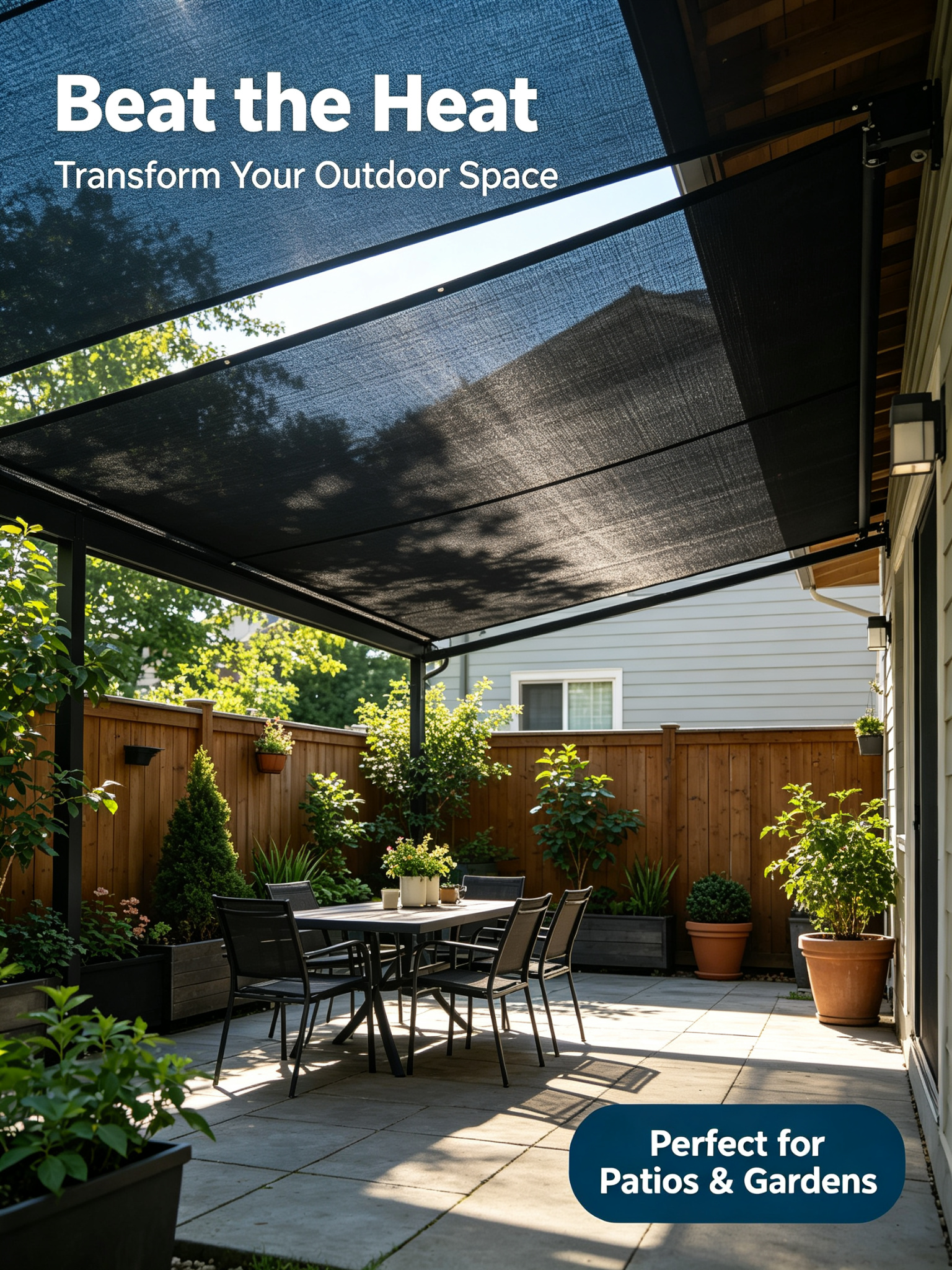
Beyond plant protection, sunshade nets are also applicable to construction site soil covering, outdoor material stacking, vehicle parking and courtyard terrace shading. They effectively block dust, fallen leaves and sundries, and protect outdoor equipment and materials from aging and damage caused by sun and rain, realizing both environmental dust prevention and physical protection.
3. Main Classifications and Characteristics
3.1 Classification by Shading Rate
Shading rate is the core parameter of sunshade nets, with common specifications of 30%, 50%, 70%, 85% and 90% for different scenarios. Low shading rate nets (30%-50%) with good light transmittance are suitable for sun-loving plants, mild courtyard sun shading and venue shading. Medium and high shading rate nets (70%-85%) deliver excellent shading and cooling effects, ideal for greenhouse seedling raising, shade-loving flowers and outdoor parking sun protection. Ultra-high shading rate nets (above 90%) achieve nearly full shading, applicable for light-avoiding seedling cultivation, equipment light protection and engineering dust covering.
3.2 Classification by Color
black sunshade nets are the mainstream in the market, featuring high shading rate, optimal cooling effect and high cost performance, suitable for most agricultural and outdoor protection scenarios. Green and gray sunshade nets have beautiful appearances with both sun protection and decorative effects, mostly used for balconies, courtyards and landscape gardens. Silver-gray sunshade nets have stronger anti-ultraviolet performance and certain insect-proof effects, perfect for high-end seedling cultivation.
3.3 Classification by Material and Technology
New HDPE sunshade nets feature high purity, good toughness, aging resistance, long service life and no peculiar smell, suitable for long-term outdoor use. Recycled material sunshade nets are low-priced but prone to aging and damage with uneven shading, only for short-term temporary covering. PET sunshade nets have higher precision, excellent ultraviolet isolation performance and stable quality, adapting to refined planting scenarios.
4. Wide Range of Applications
1. Agricultural Planting: Used for vegetable greenhouses, fruit and melon seedling raising, flower planting, seedling cultivation and Chinese medicinal herb planting. It protects crops from high temperature, strong light, wind and rain, and improves crop quality and yield.
2. Landscape Gardening: Applied to family balconies, courtyard green plants, lawn maintenance and park landscape protection, creating a suitable growth environment for shade-loving plants and beautifying outdoor spaces.
3. Civil Outdoor Use: Suitable for open-air parking lots, terraces, yards and swimming pool shading, lowering outdoor temperature and creating a cool and comfortable outdoor leisure environment.
4. Engineering Dust Prevention: Used for soil covering on construction sites, sand and gravel stockpile covering and road dust control, effectively inhibiting dust diffusion and meeting environmental protection construction standards.
5. Breeding Protection: Covered on livestock and poultry breeding sheds and aquaculture ponds to adjust internal temperature, avoid stress caused by sun exposure and optimize breeding environment.
5. Purchase and Maintenance Tips
It is recommended to prefer new HDPE sunshade nets with UV anti-ultraviolet coating. Match the shading rate according to usage scenarios: 50%-70% for plant seedling raising, and 80%-90% for outdoor sun protection and dust prevention. Check the weaving density before purchase; high-quality products feature uniform meshes, no broken threads and firm edge binding.
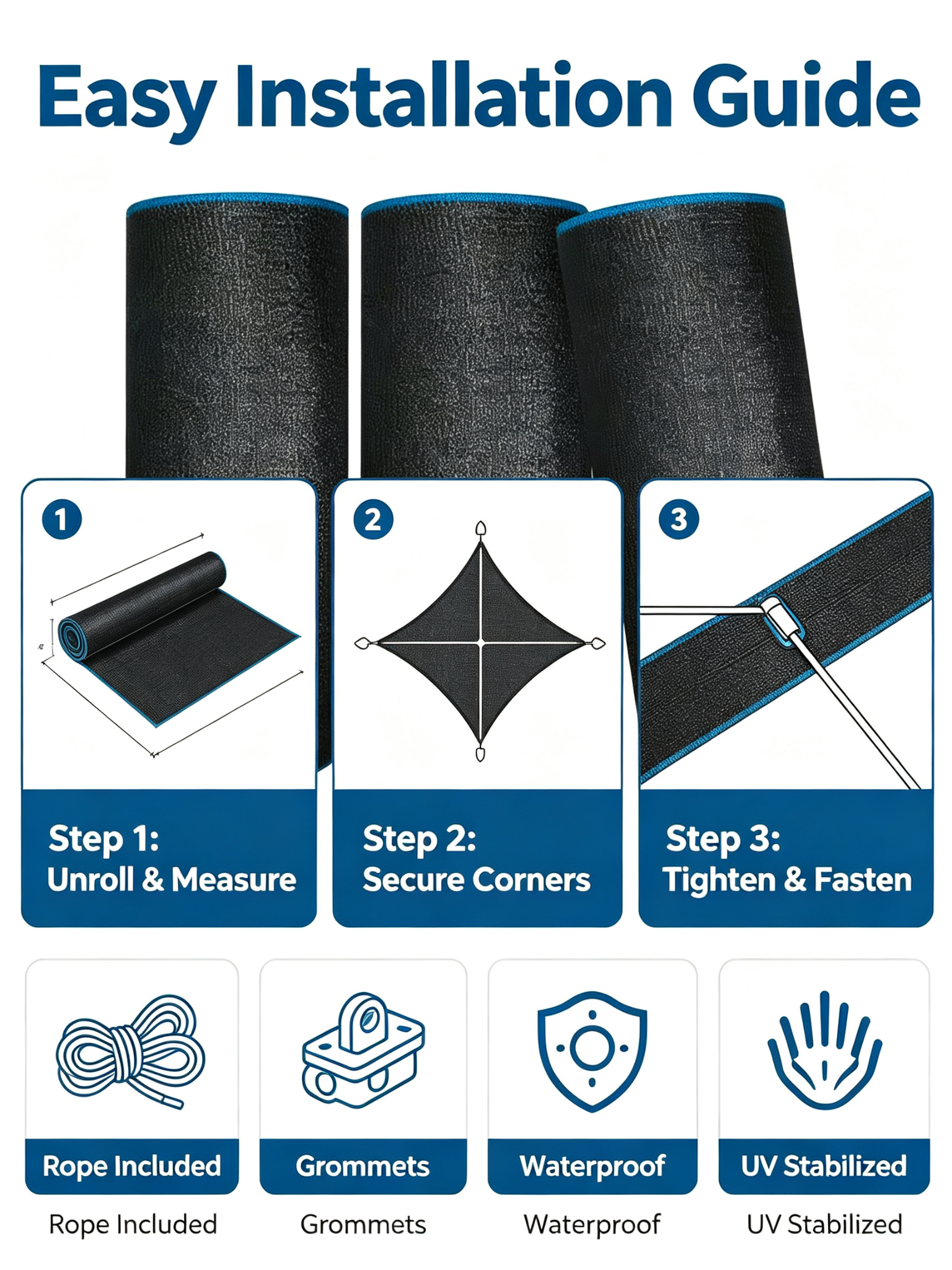
Avoid violent pulling during installation to prevent thread breakage. When not in use, clean the net, remove dust and sundries, and store it in a dry and ventilated place. Avoid long-term water accumulation and sun exposure to extend service life, realize reuse and reduce overall costs.
6. Summary
With multiple advantages including sun shading and cooling, moisture retention and wind resistance, dust prevention, all-season availability and high cost performance, sunshade nets break the limitations of traditional protective materials with balanced functionality and practicality. They perform well in agricultural production improvement, family outdoor sun protection and engineering environmental protection. As a multi-functional protective material suitable for all scenarios, it is a green, energy-saving and convenient priority choice for modern production and life.


 RELATED
 RELATED
 RELATED
 RELATED


 Español
 Portugues
 Pусский
 Français
 Deutsch
 日本語
日本語 한국어
한국어 العربية
 ไทย
ไทย



 WhatsApp
 Phone
Phone